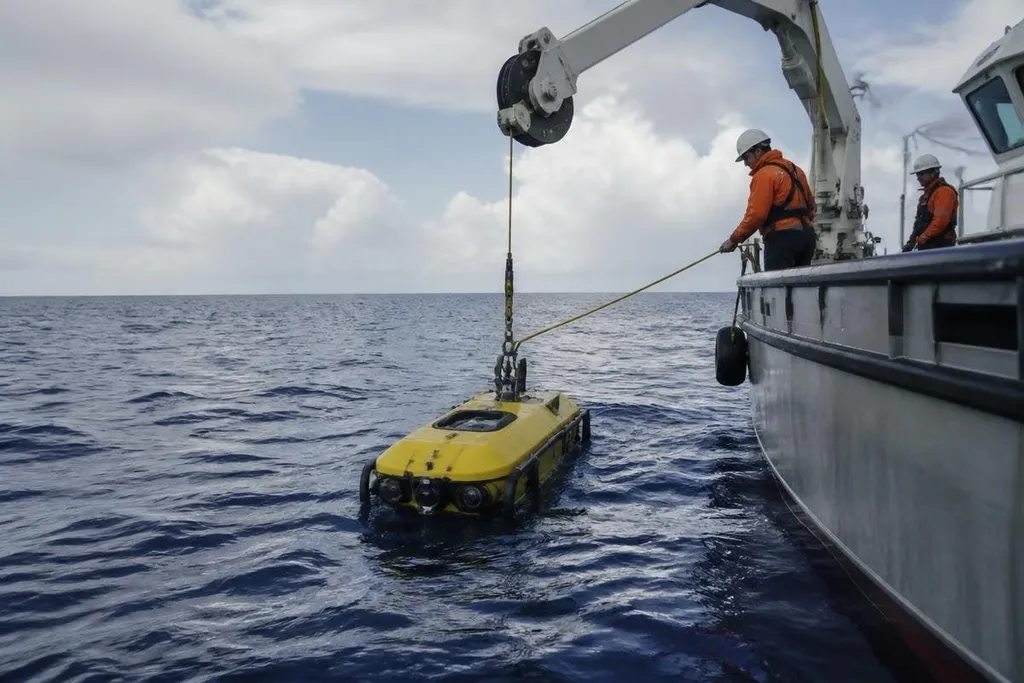
An underwater robot can look capable in clear water for five minutes. The harder test starts when salt water, pressure, weak signals, and low visibility take control of the job. For an engineer or buyer comparing autonomous systems, better means useful work that continues after the camera view ends.
- More time underwater means fewer recovery trips
- Sonar and pressure housings matter as much as software
- The open question is reliable autonomy in changing water
Time underwater changes the job
A robot that must return to a support vessel every few hours creates work for the crew. The vessel needs to hold position, recover the robot, recharge it, and put it back in the water. That process can erase the value of a short inspection run.
Battery size helps, but it adds weight and changes buoyancy.
A tether removes much of the battery limit, yet the cable can snag on structures, drag across the seafloor, or restrict where the robot can move. Designers have to choose the power system around the task rather than the demo.
For inspection, a slow vehicle with long endurance may be more useful than a fast vehicle that needs frequent recovery. A survey team may care about steady sensor coverage, while a repair crew may need force at the end effector, the part that touches the object.
Depth changes the hardware
Water pressure rises with depth, so the robot needs a pressure housing for its electronics. Seals, connectors, cameras, and batteries all have to keep working while the housing faces that load.
A failure at depth costs more than a failed lab test. Recovery may need another vehicle, a ship, or a long wait for safe conditions. That is why a depth rating should be read beside the test method and mission time, not treated as a single score.
Buoyancy control matters too. A robot that becomes too heavy after taking on water will need more thrust to hold position. More thrust draws more power, which cuts mission time. Small leaks can become a control problem before they become a total loss.
Data is hard to send underwater
Radio signals that work well in air lose much of their range underwater. Many underwater systems use acoustic communication, which sends data through sound. It can work over useful distances, but it carries less data and can face delay, noise, or reflections from the seafloor and nearby structures.
That limit changes how the robot works. A remote operator may receive short status messages instead of a live, high-resolution video feed. The robot may need to store sensor data onboard, make a local decision, and send the result when the link allows it.
Sonar becomes important when light cannot show enough. It can map objects and terrain, but the output needs careful processing. A shape on a sonar screen may be a pipe, rock, cable, or part of the seabed. Software can help, yet the machine still needs tests in the water where it will operate.
For an operator comparing underwater systems, reports on underwater robotics from Robot24.com can tie sensor and control claims to named vehicles, test sites, dates, and operators. Those details set up the next issue: whether autonomy can cope with currents, poor visibility, changing terrain, and a lost control link.
Autonomy has to handle change
An underwater robot cannot rely on a fixed map for every job. Currents move the vehicle, visibility changes, and objects may sit in places the plan did not include. Navigation may combine sonar, cameras, inertial sensors, and pressure readings to estimate position.
That system can work well in one site and lose accuracy in another. A buyer should ask for test results from water that matches the planned job, including depth, current, visibility, and the type of structure being inspected.
The strongest opposing view is that remote control can handle many of these problems today. That is true for tasks with a nearby operator and a dependable tether. Autonomous control earns its place when the robot can keep working through signal loss, avoid hazards, and return safely without constant commands.
I’d judge a new underwater robot by the work it completes after the camera view ends.
A practical buying checklist
Use these questions before comparing a vehicle or signing a trial contract:
- Name the task: inspection, mapping, sampling, repair, or search
- Check mission time: include launch, travel, work, and recovery
- Match the depth rating: ask how the maker tested the pressure housing
- Trace the data path: find out what reaches the operator live
- Request site evidence: ask for trials in similar water and structures
- Plan recovery: identify the crew, vessel, and backup method after a fault
The next useful proof will come from repeated field work, with mission time, depth, sensor data, and recovery records shown together. Until that evidence is available, the better choice is the robot whose limits match the job you need done.